The Comeback
I have 7 days until I line up on the starting line of the Boston Marathon. This will be my first Boston, but it feels like a comeback to me.
It’s my marathon comeback. My last marathon build (2025 California International Marathon) gave me a lot of confidence in my fitness, but it ended in a big blow up and shuffle-jogging the last 7 miles through Sacramento.
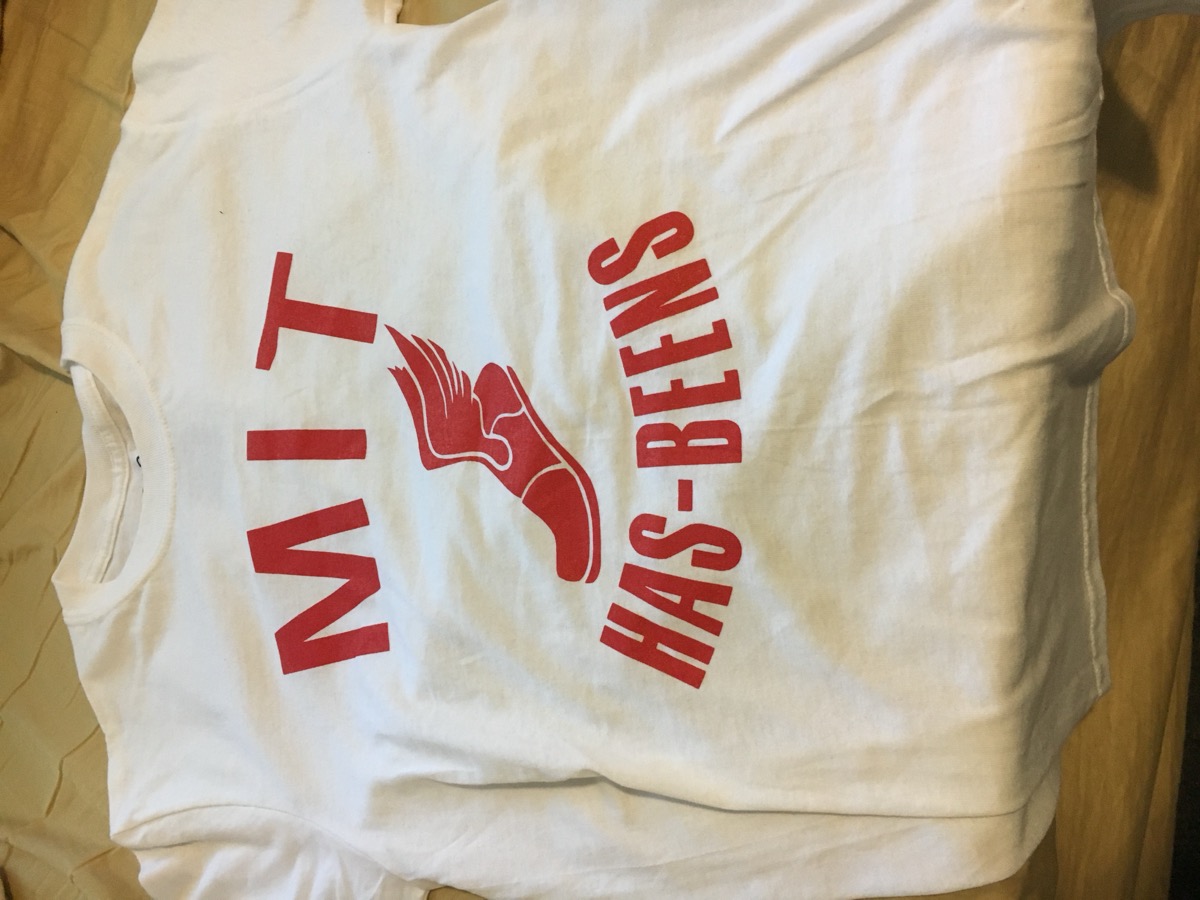
It’s my Boston comeback. I ran cross country and track during my time as an undergrad at MIT, running countless miles along the Charles. But by the time I graduated, my relationship with running was strained, I was unknowingly running on a broken foot, and I was more than ready to move away from this city.
It’s my Boston Marathon comeback. I was supposed to race Boston in 2024. At the time, I was working long hours at my previous startup job with not enough time or energy to focus on fueling my body properly. Unsurprisingly in retrospect, 3 weeks before the race, I found out that I had a stress fracture in my left foot (different foot from the previous time).
But now at 7 days to go before Boston, I feel pretty confident that I’m going to make it to the starting line in one piece this time.
The Build
I’m feeling fantastically fit now, but the start to this training cycle was definitely bumpy. Over the holidays, I took all the time I needed to rest and recharge after a disappointing CIM. It was a much-needed break, but it also meant that when I started my marathon build, I was not in the best shape.
My training by the numbers-ish + bullets:
-
Mileage: I started the build at 50 miles per week coming off the holidays and built slowly to peak at 80 miles during the last week of March. (Highest weekly mileage in the last 9 years!!)
-
Doubles: I incorporated 2-3 doubles per week this build. For Jan - Feb, these were almost all just 20-30 min Z1/Z2 cross train doubles (shout out Peloton!), but in March I started swapping out the cross trains for actual 3-4 mile run doubles as my weekly run volume increased.
-
Run Workouts:
-
2 hard workouts per week.
- Speedier stuff (800m-1mile reps) on Tuesdays or Wednesdays
- Longer tempos or long run workouts on Friday or Saturday
-
Biggest workout - 23 mile long run workout
- 1 mile warmup easy
- 9 miles @ steady ~6:50 pace
- 1 mile transition ~6:30 pace
- 12 miles @ marathon pace ~6:00 pace
-
-
Strength: I lifted 1-2 times per week consistently throughout my whole build. This was a huge accomplishment for me. Nothing fancy (lots of bulgarian split squats, RDLs, and hamstring curls), but consistency was my goal.
-
Recovery: I really prioritized recovery.
- Recovery (carbs + protein) shakes immediately after all quality workouts. Bevs of choice:
- Skratch Labs Horchata mix for shorter workouts
- SiS Beta Fuel Recovery for longer workouts
- Took 1 day fully off every ~7-14 days
- Consistent ~7-8.5 hrs of sleep almost every night
- Recovery (carbs + protein) shakes immediately after all quality workouts. Bevs of choice:
-
CARBS: This is so important that it gets its own section, but upping my carb intake was key for both workout performance and recovery
- 100-110g carb / hr during long run workouts
- Always bringing at least one 40g gel for even shorter track workout sessions
- Gels of choice:
- For substance: SiS Beta Fuel gels + electrolytes - 40g carb per gel
- For joy: Powerbar Powergel Hydro Mojito flavor - only 25g carb per gel + 50mg caffeine
- For getting zooted: SiS Beta Fuel Nootropics gel - 40g carb, 200mg caffeine, 200mg L-theanine
- Drink mix of choice: Skratch labs strawberry lemonade - 20g carb per scoop
-
Injuries:
- Successfully rehabbed left hamstring strain through hamstring strength work
- Moderate success keeping my right plantar fasciitis in a state of mediocrity, but not holding me back
- ZERO MISSED TRAINING DAYS FOR INJURY! (But I still did take many planned days off!)
-
Shoes:
- Easy days - rotation between Nike Vomero, On Cloudmonster
- Races - Puma Fast-R Nitro Elite
- Workouts - Old pair of above Pumas for long run workouts, Nike Vaporfly’s for speedier workouts
-
Marginal gains experimentation:
- Passive heat training - relaxing sauna sessions 1-2 times per week. There is good research for not just heat adaption (in case Boston is warm) but also for boosting blood volume
- Maurten Bicarb - I think success? Had it before my half marathon PR, I will try it for the marathon. Good evidence/research on bicarb for shorter events, and some anecdotal evidence for longer distances. Causes me no GI distress, so why not?
- No altitude stint this training build, but want to try in the fall
Highlights/lowlights from each month:
January
The training cycle started out with a bang in January where I got my butt kicked at club cross country nationals in Tallahassee, FL. My XC performances are relatively mediocre on a good day, but when you add sand, water, and mud pits, an artificial ramp, and wooden logs to hurdle, let’s just say it may have been the slowest 6K race I’ve ever run. After that race, I seriously questioned whether to scratch Boston and save it for a fall marathon instead, but I decided to stick with it.
February
February continued with my fitness feeling generally meh. I was getting consistently dropped in workouts by my training partners. I got sick. I raced a 10 miler in Prospect Park that was 2 minutes slower than my PR.
March
This is where things started to actually turnaround. I stopped getting dropped as much in workouts. I raced in 2 half marathons, winning the first and definitely not winning the second but still earning a shiny new PR of 1:17:06 at the United NYC Half. A week later, I ran the best long run workout of my life thus far.
April
By April, I finally felt fit. I had felt like Jan - March I was trying to just return to the fitness I had in December, but by April I felt like I was even better (although Strava still tells me my fitness is lower than December).
Boston Goal & Plan
My goal in Boston is to break 2:40. This was the same time goal I had for 2025 CIM, but this time I hope to actually stick to the plan!
Quick 2025 CIM Refresher
My multi-year goal is to qualify for the Olympic Trials in the marathon, meaning I’ll need to run sub 2:37. So my goal at the start of the CIM build was discovering whether I was even in the right ballpark, whether I even have what it takes to eventually run an Olympic Trials Qualifier (OTQ). My CIM training gave me that confidence that I did, but perhaps a bit too much confidence. I told myself that no matter what happened on race day, I had already gained so much and proven to myself that I was on the right track, and I would be happy no matter what happens on race day. So even though my training showed that I wasn’t quite yet ready for OTQ pace, when the race started, I threw caution to the wind and raced with the OTQ pack. It was exceedingly dumb and I predictably crashed and burned after mile 18. I should have stuck to my plan and gone for a sub 2:40, which would still have been a huge PR. And yet, I don’t fully regret going for it because it’s that same unreasonable belief in yourself that makes achieving the impossible possible.
Back to Boston
But I want Boston to be different. I’m not satisfied just feeling like I could break 2:40, I want to actually break 2:40. This time, I’d be lying if I said that I would be happy with any race outcome. I want to see my name with a PR that says 2:3X. I need to race smart and I need to race tough.
My Race Plan
-
Fuel
- total
- 285g carb
- 250mg caffeine
- the details
- 5 SiS Beta fuel gels + electrolyte
- 1 SiS Beta fuel nootropics gel
- 1 Powerbar Powergel Hydro
- 1 handheld bottle w/ scoop of Skratch raspberry lemonade
- on-course Gatorade + water as needed
- total
-
Course strategy
- Conservative on the initial 6-mile downhill (6:00-6:10)
- Steady ~6:04 pace through the middle, really focus on the Newton Hills (and hope the strength work paid off)
- Give everything I have left in the last ~5 miles after Heartbreak Hill (maybe some sub 6’s if I’m feeling spicy)
-
Drink a beer after I finish
If I execute on the above, I really believe I will break 2:40… and who knows, maybe I’ll surprise myself in the last few miles :)
Anyways, with 7 days to go to Boston, the cake is baked and now it’s just time to let it cool. Good luck to everyone else racing Boston.
Right on Hereford, left on Boylston, and we’ll be there!
Build a plan like this with Toga
The structure of this build (two quality sessions a week, gradual mileage increases, and consistent strength work) is what Toga builds into your plan, adapted to your own goal race, schedule, and injury history. And if you want help with a race-day fueling plan like mine, you can ask the Toga coach for hourly carb targets, gel timing, and how to train your gut.
Last updated September 29, 2026
Frequently asked questions
My plan was to run the first 6 downhill miles conservatively (6:00 to 6:10 pace for a sub-2:40 goal), hold a steady ~6:04 through the middle, stay controlled over the Newton Hills, and save everything for the last ~5 miles after Heartbreak Hill. Going out too fast on the downhills can wreck your quads for later.
In training I took 100 to 110g of carbs per hour on long run workouts, and my Boston race plan was 285g of carbs in total from gels, a drink mix and on-course Gatorade. That is a lot, so build up gradually in training to teach your gut to handle more carbs.
My Boston build started at 50 miles per week and peaked at 80, with 2 hard workouts a week (800m to mile repeats, plus long tempos or long run workouts), 2 to 3 doubles, and strength work 1 to 2 times a week. My biggest session was a 23-mile long run with 12 miles at marathon pace.